Absolute Asia/Destinations/Japan/Places to Visit/Hiroshima and Miyajima: Peace Memorial Park, the A-Bomb Dome and Itsukushima Shrine
Private & Tailor-Made Japan Tours
A city that chose peace, and a sacred island half an hour away
The Essence of Hiroshima and Miyajima
Hiroshima's A-Bomb Dome and Miyajima's Itsukushima Shrine were both listed by UNESCO in December 1996. They are about an hour apart by train and ferry.
Hiroshima is a modern, easygoing city on a river delta, and it’s also the place the world associates with the first atomic bomb. A visit here is one of the most moving in Japan. It’s also easy to combine with Miyajima, a sacred island with a famous shrine, about an hour away.
| A-Bomb Dome | built 1915, UNESCO 1996 |
|---|---|
| Bombing | 6 August 1945, 8:15 am |
| Peace Memorial Park | completed 1 April 1954 |
| Itsukushima torii | 16 m high |
| Shukkeien garden | begun 1620 |
The Atomic Bomb Dome
The A-Bomb Dome was built as the Hiroshima Prefectural Commercial Exhibition Hall. It was finished on 5 April 1915 and opened that August, designed by the Czech architect Jan Letzel. It was partly built of reinforced concrete, then still unusual in Japan, with three floors above ground and one below.
On 6 August 1945, at 8:15 in the morning, an atomic bomb was dropped on the city. It exploded about 600 meters above a point 150 meters east of the building, and the Dome’s frame was left standing while most of the surrounding city was destroyed. The ruin has been preserved as it was left. UNESCO listed it as a World Heritage Site on 5 December 1996, and in September 2025 it became the first modern site in Japan designated a National Special Historic Site. Look at it from the riverbank, and keep out of the fenced area.
Peace Memorial Park and the museum
The park beside the Dome was a busy commercial district called Nakajima before 1945. It was laid out as a park after the war and completed on 1 April 1954, on a single axis that links the Peace Memorial Museum, the cenotaph and the Dome. Each year on 6 August a ceremony is held here, with a silent prayer at 8:15. The museum is the place to understand what happened; allow at least two hours, and consider visiting it before the park so that the memorials have context. Visit with respect: this is a place of mourning.
Shukkeien garden
A short walk from the center, Shukkeien is a garden begun in 1620 for the local lord, Asano Nagaakira, and designed with the tea master Ueda Soko. It was given to the prefecture in 1940, wrecked in 1945, and rebuilt by the 1970s. It’s a calm place to sit after the park and museum.
Miyajima and Itsukushima Shrine
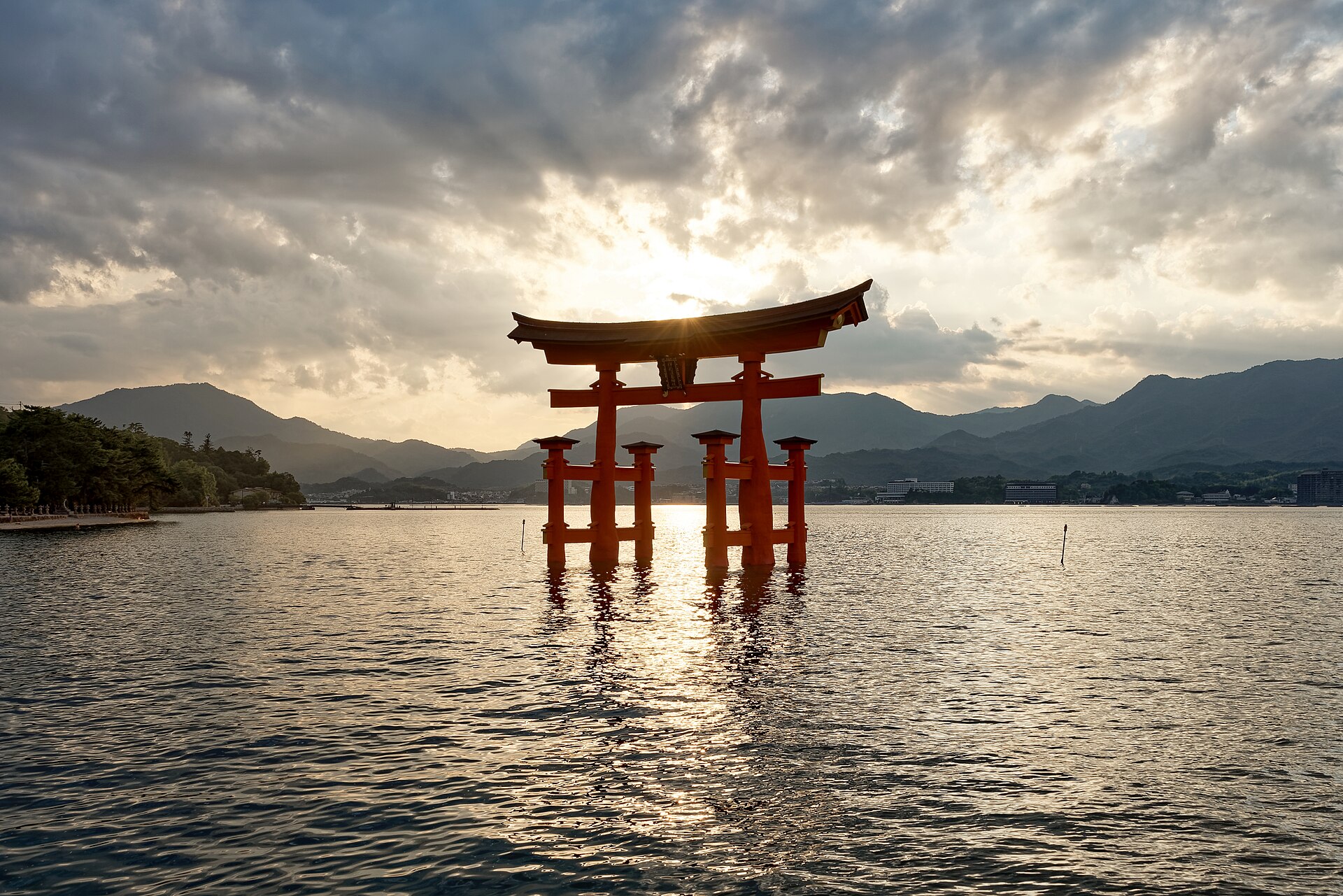
Miyajima, formally Itsukushima, is a small island in the Seto Inland Sea, and it counts as one of Japan’s Three Views. The shrine on its shore is traditionally dated to 593, and in about 1168 the warlord Taira no Kiyomori rebuilt it as the large complex of halls and corridors you see now, standing over the water. Six of its buildings are National Treasures and 14 are Important Cultural Properties. UNESCO listed it in December 1996. The great torii gate stands 16 meters high in the sea, and the way it appears to float depends on the tide, so check the tide table: at high tide it stands in water, and at low tide you can walk to it across the sand.
Behind the shrine, Mount Misen rises to 535 meters, and you can reach the top by ropeway or on foot. Give Miyajima half a day.
What to eat
Hiroshima-style okonomiyaki is a savory pancake in which the ingredients are layered rather than mixed, usually with noodles, and it’s the city’s signature dish. Miyajima is also known for grilled oysters, in season.
How to plan it
Hiroshima is on the Shinkansen line between Osaka and Fukuoka. A single day can cover the park, the museum and Miyajima if you start early; two days is better, with the shrine at the end of the day when the crowds thin. See our guides to Kyoto, Osaka and Kobe, and our Japan tour packages.
Planning Hiroshima with Absolute Asia Tours
Absolute Asia Tours has planned private trips in Asia since 1989. In Hiroshima that means a guide who can lead you through the museum and park with care, a ferry and tide schedule worked out for Miyajima, and a table for okonomiyaki. We’re rated 4.8 out of 5 across about 900 traveler reviews. Have a look at our Japan tours or tell us your dates.
Sources (read in Japanese, Japanese Wikipedia): 広島市, 原爆ドーム, 厳島神社, 縮景園. Last checked November 2026.
Hiroshima and Miyajima: FAQ
How many days do you need in Hiroshima?
One long day for the park, the museum and Miyajima, or two days for a slower pace.
What is the Atomic Bomb Dome?
The ruin of the former Prefectural Commercial Exhibition Hall, left as it stood after the bombing on 6 August 1945, and a UNESCO World Heritage Site since 1996.
When is the Peace Memorial Ceremony?
Each year on 6 August, with a silent prayer at 8:15.
How tall is the Miyajima torii?
16 meters. Its appearance depends on the tide.
How far is Miyajima from Hiroshima?
About an hour by train and ferry, depending on connections.
What is Hiroshima-style okonomiyaki?
A savory pancake with layered ingredients, usually with noodles.
Photo: Jakub Hałun, Wikimedia Commons, CC BY 4.0.

The Private Difference
Tailor-Made Hiroshima and Miyajima Journeys
Absolute Asia curates completely bespoke, 100% private luxury journeys across Japan. Guided by certified bilingual scholar specialists, experience seamless Shinkansen Green Class transit with separate luggage forwarding (Takkyubin), private access to master swordsmiths and tea ceremony masters, reservations at secluded onsen ryokans like Gora Kadan and Asaba, and stays at iconic urban sanctuaries including Aman Tokyo and The Ritz-Carlton Kyoto.
Destination Quick Facts
| Ideal Duration | 10 – 16 Days (or 16 – 22 Days combined with South Korea) |
| Best Season | Mar – May (Cherry Blossom & Spring Blooms), Oct – Nov (Vibrant Autumn Foliage), Dec – Feb (Crisp Winter Snow & Thermal Onsens) |
| Typical Budget | $650 – $1,400+ per guest / day (Private executive vehicle & chauffeur for day touring, Shinkansen Green Class, certified bilingual private guide, 5-star luxury ryokan & hotel stays) |
| Travel Style | 100% Private, Bespoke Cultural Immersion & Ultra-Luxury |
| Best For | UNESCO Heritage Temples & Zen Gardens, Haute Kaiseki & Michelin Dining, Private Onsen Thermal Baths, Contemporary Art Islands, Samurai & Artisan Crafts |
Our Favorite Journeys
Discover Hiroshima – A City of Resilience and Hope
Hiroshima is a city of profound history and hope, rebuilt after the tragic events of World War II. Known for the Peace Memorial Park and its vibrant culture, Hiroshima offers an inspiring journey through resilience, history, and beauty.
We are composing new Hiroshima and Miyajima itineraries right now. Tell us what you have in mind and a designer will build one around you.
Transparent Pricing Intelligence
What Does a Private Hiroshima and Miyajima Tour Cost?
Japan represents a world-class standard of service and precision where private travel demands meticulous planning. Every Absolute Asia journey includes dedicated private chauffeured vehicles for transfers and excursions, Green Class bullet-train seating with door-to-door luggage forwarding, licensed national scholar guides, curated multi-course Kaiseki dinners, and vetted luxury boutique accommodations.
$650 – $850 per guest / day
Premier 5-star international and heritage hotels (Palace Hotel Tokyo, Hyatt Regency Kyoto), private chauffeured touring in key cities, Shinkansen Green Class tickets, licensed bilingual private guides, and select traditional multi-course dining.
- 5-star luxury city hotels
- Licensed bilingual private guides throughout touring
- Reserved Shinkansen Green Class seats with luggage forwarding
- Private chauffeured airport & city transfers
- Curated temple admissions & traditional tea ceremony
$900 – $1,500 per guest / day
Iconic luxury properties (Aman Tokyo, The Ritz-Carlton Kyoto, Four Seasons Kyoto) combined with premier authentic onsen ryokans featuring private open-air hot spring baths (Gora Kadan, Asaba, Benesse House on Naoshima), private Mercedes van touring, and exclusive cultural access.
- Private-onsen suites at Japan's finest historic ryokans
- Multi-course seasonal Kaiseki dinners prepared by master chefs
- Private access to master artisans (swordsmiths, ceramicists, tea masters)
- Dedicated Mercedes van & chauffeur for rural and scenic touring
- 24/7 bilingual travel concierge & VIP airport greeting
$1,600 – $2,800+ per guest / day
Uncompromising bespoke luxury: Amanemu, Aman Kyoto, exclusive-use historic machiyas in Gion, chartered helicopter transfers over Mount Fuji, private after-hours temple visits with resident abbots, and Michelin 3-star culinary experiences with private geiko entertainment.
- Exclusive villa, pavilion, or private machiya estates
- Chartered helicopter transfers (Tokyo to Hakone/Ise-Shima)
- Private opening of National Treasure temple gardens after hours
- Private geiko (geisha) banquets in Gion tea houses
- Top-tier bespoke sommelier and master chef experiences
What Drives Your Total Investment?
- Peak seasonal premiums during Cherry Blossom (late March–mid April) and Autumn Foliage (November) require reservations 6–10 months in advance
- High-end authentic ryokans with in-room private onsen and multi-course kaiseki meals command premium nightly tariffs
- Private chauffeured executive vehicles (Mercedes V-Class/Alphard) in dense metropolitan Tokyo and Kyoto vs. strategic Shinkansen Green Class bullet rail
- Exclusive access honorariums for private Zen abbot tea ceremonies, master craft workshops, and licensed national interpreter-guides (Tsuyaku-annai-shi)
Local Operational Realities
What You Need to Know Before Traveling in Hiroshima and Miyajima
Shinkansen Green Class & Luggage Forwarding (Takkyubin)
High-speed Shinkansen trains have limited oversized luggage storage and narrow platforms. We arrange seamless Takkyubin (luggage forwarding), sending heavy suitcases ahead from Tokyo directly to your ryokan in Hakone or hotel in Kyoto. Guests travel light with an overnight daypack, boarding the bullet train in reserved Green Class seats completely unencumbered.
Ryokan Etiquette, Kaiseki Dining & Private Onsen Reservations
Historic Japanese ryokans follow centuries-old hospitality traditions (omotenashi). Dinner is served at a precise evening hour and represents a multi-course Kaiseki art form highlighting local micro-seasonal ingredients. Absolute Asia coordinates dietary adjustments in advance (vital because authentic dashi broth contains bonito fish flake) and reserves private hot spring baths (kashikiri-buro) for couples and families.
Urban Transit Logistics: Private Executive Chauffeurs vs. High-Speed Rail
While Tokyo and Kyoto traffic can be congested during rush hours, private chauffeured vehicles are essential for seamless out-of-city excursions (Mount Fuji foothills, Hakone mountain roads, Nara deer park, Arashiyama bamboo groves). For intercity transit between Tokyo, Nagoya, Kyoto, and Osaka, Shinkansen bullet trains reach 320 km/h and operate with minute-perfect punctuality, eliminating highway delays.
Licensed National Interpreter-Guides (Tsuyaku-annai-shi)
Japan maintains stringent national licensing for professional guides. Absolute Asia pairs you exclusively with veteran, native or fluent English-speaking scholar guides who illuminate the nuanced historical, spiritual, and artistic context of Shinto shrines, Zen rock gardens, and imperial palaces that independent visitors frequently miss.
Handpicked 5-Star Sanctuaries
Signature Stays & Exclusive Experiences in Hiroshima and Miyajima
Aman Tokyo
Monumental 30-meter washi paper lobby lantern, panoramic skyline views over the Imperial Palace gardens, and serene basalt onsen baths high above the metropolis.
Gora Kadan
Former imperial family summer retreat nestled in the misty cedar forests of Hakone, featuring natural hot spring onsens, tatami suites, and Michelin-caliber kaiseki dining.
The Ritz-Carlton, Kyoto
Serene riverside retreat honoring Meiji architectural aesthetics with private Zen gardens, Pierre Hermé patisserie, and walking access to Gion's historic geisha district.
Hoshinoya Kyoto
Secluded riverside sanctuary accessible exclusively by a private 15-minute scenic wooden boat ride up the Oi River, surrounded by Japanese maples and wild cherry blossoms.
Benesse House & Oval
Tadao Ando-designed architectural masterpiece where museum and luxury hotel merge, offering guests after-hours private viewing of world-class modern art installations.
Aman Kyoto
Hidden 80-acre moss garden sanctuary at the foot of Mount Hidari Daimonji, surrounded by cedar forests, secret pathways, and natural thermal onsen pavilions.
Tailored to Your Style
Family & Honeymoon Journeys in Hiroshima and Miyajima
Private Japan Family Adventures
Engage every generation with tailor-made experiences: private ninja and samurai sword training in Kyoto, VIP access to Tokyo's digital art museums and anime studios, making traditional ramen and sushi with master chefs, feeding sacred deer in Nara, and bullet-train rides through the Japanese Alps.
- Hands-on samurai swordplay and shuriken throwing with a martial arts master in Kyoto
- VIP pre-opening or skip-the-line access to teamLab Planets and Ghibli Museum in Tokyo
- Interactive soba noodle making and Tsukiji outer market private food tastings
- Bullet-train rides with Green Class reserved seating and door-to-door luggage forwarding
- Private family onsen suites and spacious connecting rooms at premier 5-star hotels
Romantic Japan Escapes & Private Onsen Retreats
An exquisitely romantic journey designed for couples: stay in private ryokan villas featuring open-air cedar onsen baths overlooking misty bamboo valleys, wander through lantern-lit Gion stone alleys on a private evening walking tour, savor 10-course Kaiseki dinners served in your suite, and enjoy private sunset champagne cruises on Tokyo Bay.
- Exclusive ryokan suites with private open-air onsen baths overlooking Mount Fuji or mountain rivers
- Intimate multi-course kaiseki banquets served course-by-course in the privacy of your tatami room
- Private after-hours blessing ceremony and quiet meditation at a historic Kyoto Zen temple
- Bespoke couple's spa rituals incorporating green tea, cedarwood, and natural hot spring minerals
- Private chauffeured transfers and discreet 24/7 concierge managing all dining reservations
Cross-Border Extensions
Seamless Multi-Country Extensions Beyond Hiroshima and Miyajima
Connect multiple Asian cultures into one coherent private journey with expert in-country concierge coordination.
Japan & South Korea: East Asia Cultural Icons
Tokyo → Hakone → Kyoto → Osaka → Seoul → Busan
Short 2-hour non-stop flight connecting Osaka Kansai (KIX) or Tokyo Haneda (HND) to Seoul Incheon (ICN) / Gimpo (GMP).
Japan & China: East Asian Imperial Dynasties
Tokyo → Hakone → Kyoto → Osaka → Shanghai → Xi'an → Beijing
Direct 3-hour international flight connecting Tokyo/Osaka to Shanghai/Beijing on ANA, JAL, or Air China.
When to Go
The optimal times to visit Japan are during the spring (March to May) for the cherry blossoms and mild weather, and autumn (October to November) for vivid fall foliage, comfortable temperatures, and dry skies across Tokyo, Kyoto, and the countryside.
Winter (December to February) is magical for snow landscapes in Hokkaido, quiet temple contemplation in Kyoto, and private onsen bathing in Hakone, while early summer (June) brings blooming hydrangeas and lush greenery.
Month by Month
Japan Through the Seasons
Cherry Blossom Spring (Sakura)
Delicate pink blossoms sweep across Tokyo, Kyoto, and Kanazawa; pleasant weather and celebrated garden blooms.
Summer Greenery & Festivals (Matsuri)
Lush moss gardens, vibrant evening lantern festivals, and refreshing alpine escapes in Hakone and the Japanese Alps.
Autumn Foliage (Momiji)
Fiery red and gold maple leaves illuminate temple gardens in Kyoto and Nara; crisp, comfortable touring conditions.
Winter Snow & Steaming Onsens
Crisp clear skies with Mount Fuji vistas, piping hot outdoor thermal baths, snow monkeys, and quiet winter shrines.
Frequently Asked Questions
Private Travel to Hiroshima and Miyajima: Essential Advice
Verified Traveler Stories
Recent Guest Experiences in Hiroshima and Miyajima
“Traveling with Absolute Asia made Japan effortlessly magical. Having our luggage forwarded ahead while we enjoyed the Green Class Shinkansen meant zero stress. Our guide in Kyoto, Kenji, arranged a private tea ceremony with a 15th-generation master that we will remember forever. Gora Kadan was an absolute dream.”
“Our family of five had an incredible two weeks in Japan. The mix of high-tech Tokyo, private ninja training in Kyoto, and feeding the deer in Nara kept our teenagers completely captivated. Absolute Asia's organization was flawless—our driver was always waiting, and the hotels exceeded every expectation.”

Start Planning
Ready to see Hiroshima and Miyajima on your own terms?
Share a few details and a private travel designer will reach out within one business day.